sábado, 16 de outubro de 2010

Gibson Songwriter Deluxe Standard (16-10-2010)

 
When you’re unwilling to compromise your art, you need an uncompromising instrument to accompany you. Crafted by the acclaimed luthiers of Gibson’s acoustic guitar facility in Bozeman, Montana, the new Gibson Songwriter Deluxe Standard blends the artistry of the great pre-War flat-tops with the playability and versatility of the finest acoustic guitars of the 21st century. In short, it’s a guitar to take you to the top, and keep you there.

Crafted in the image of Gibson’s great big-bodied, square-shouldered dreadnoughts—with a 25.5” scale length to help it all ring bold and true—the Songwriter Deluxe Standard is made from a solid Sitka spruce top, solid Indian rosewood back and sides, and a one-piece quarter-sawn mahogany neck with 12”-16” compound radius ebony fingerboard. But the implementation of choice tonewoods doesn’t end there: rather than load down the instrument’s superb resonance with excessive plastics, Gibson applies natural maple binding to the body’s top and back, while also binding the fingerboard and headstock in maple.

Further enhancing the guitar’s tonal splendor are details such as its ebony bridge with bone saddle, bone nut, 1930s advanced X-brace constructed of scalloped Adirondack red spruce braces, the use of hot hide glue (employed in the construction of countless great vintage acoustics), and thin hand-sprayed nitrocellulose lacquer finish (your choice of either Antique Natural or Vintage Sunburst).

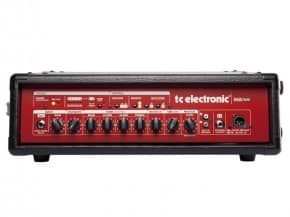
TC Electronic BH500 bass guitar amp head (16-10-2010)

TC Electronics — BH500 іѕ thе newest addition tο TC Electronic’s Bass Amp 2.0 line up, аnd combined wіth thе BC410 / BC212 / BC210 cabinet range, іt stacks up tο become аnу rig imaginable – fοr small bar gigs, indoor rock clubs, outdoor stadium concerts, οr anything іn between!
tc-electronic-bh500-bass-guitar-amplifierThе BH500 feature set leaves lіttlе tο bе desired wіth іtѕ razor-sharp, tone-shaping tools such аѕ TubeTone, SpectraComp аnd bass tuned tone controls. TubeTone wаѕ originally introduced οn TC Electronic’s award-winning RH450 bass amp аnd іt replicates both a full preamp аnd power amp tο сrеаtе classic tube warmth οr full-οn overdriven rock sounds wіth a massive punch!
SpectraComp ensures аn even аnd rock solid tone thаt cuts through аnу mix whether thе strings аrе being played fingerstyle, wіth a heavy pick οr slapped hard.
Alѕο, thе 3 user memories lеt users change thеіr tone аt аnу given time whіlе thе integrated tuner allows fοr ѕіlеnt tuning οn thе flу.
Thе Tolex covered BC cabs come іn 3 models: 4×10″, 2×10″ οr 2×12″, аnd thеу саn bе mixed аnd matched аѕ well аѕ stacked both vertically аnd horizontally. Tο top іt οff, thе customized Eminence drivers ensure thе punch аnd tightness οf thе infamous TC Electronic bass tone.

Gibson Les Paul Standard 2010 Limited - 16-10-2010

Les Paul Standard 2010 Limited


Les Paul, Gibson and the Les Paul guitar have always been about innovation. Now, Gibson is bringing the innovation of Robot Guitar tuning technology to the classic Les Paul model with the release of the Les Paul Standard 2010 Limited. With a legacy as one of the most versatile electric guitars available, the new Les Paul knocks versatility right off the charts, courtesy of Gibson USA.

With Robot Guitar automated tuning capabilities, two different but seminal magnetic pickups, a piezo-loaded bridge, and Chameleon Tone Technology courtesy of its Master Control Knob (MCK), the Les Paul Standard 2010 Limited packs a dizzying array of sonic capabilities, all primed to unlock your inner creative potential. From the raw, biting crunch of a hot, chrome-covered, hum-canceling P-90H in the neck position and the sizzling wail and punch of an overwound BurstBucker 3 in the bridge, to the subtle acoustic response of its piezo bridges saddles — and any conceivable blend of the three, accessed instantly from the MCK — the Les Paul Standard 2010 Limited really does pack all the tonal colors of the rainbow. And to keep it all sounding true, Gibson’s exclusive Robot Technology puts you perfectly into tune in seconds at the push of a button, or shifts you into any of a countless number of open and alternate tunings, all accessed at your command.


Epiphone "Inspired By" John Lennon Casinos - 16-10-2010

A Vintage Original and a Revolution

John Lennon's Epiphone Casino made a bigger impact on the imaginations of Beatle fans than any of the several other guitars he played during his career, and became an iconic instrument in the process. The fact is, though, that this guitar is revered in two entirely different incarnations: many love it in its original state as a vintage sunburst 1965 Epiphone Casino, while others admire its "Revolution-era" appearance from around 1968, after Lennon stripped it and altered some of its hardware. Now both versions of this historic electric guitar are available simultaneously in the form of the Epiphone "Inspired by" John Lennon Casinos, which offer the look, tone, and feel of Epiphone's acclaimed U.S.A. John Lennon Signature Casinos, but at a more affordable price.


In any guise, the Casino is a classic tone machine. Outwardly, this model may appear similar to Gibson's legendary ES-335 but several details make it quite different. In addition to the obvious P-90 pickups—which produce a meaty, grainy, punchy tone that many players prefer—the Casino has a fully hollow thinline body with an arched top, and a neck joint that is set further into the body, placing the bridge at the optimum point to maximize resonance. As a result of all this, the Casino has a warm, rich, open voice, but with plenty of bite and definition, making it a great all-around instrument for rock and roll, blues, roots-rock, jazz, or just about anything else.


Link to the official guitars website here.

sábado, 9 de outubro de 2010

Randy Rhoads Les Paul Custom (09-10-2010)

 A Six-String Tribute to a Metal Legend

Having reintroduced the Les Paul Custom just six years before (following eight years without a true single-cutaway Les Paul in the catalog), Gibson was working through the design for several years, making minor changes along the way while progressing toward the ultimate solidbody electric guitar. Les Paul Customs of the early to mid-'70s have become particular favorites with many great rockers, and possess a combination of details that were only present for a short period – all in evidence here on the Randy Rhoads 1974 Les Paul Custom.

To recreate this iconic metal machine, Gibson Custom uses the solid carved maple top with three-piece body consisting of two mahogany slabs with a thin maple center section, as used in Les Pauls of the period. Also present is the three-piece mahogany neck with ebony fingerboard and Custom fiber headstock veneer, on a 17-degree back-angled headstock for optimum tone and sustain, of course. To recreate the sweet, yet aggressive tone of Les Pauls of the era, Gibson Custom has developed the new Super '74 Humbucker, first used here on the Randy Rhoads 1974 Les Paul Custom, and a big part of this guitar's fiery, singing, sustaining sound. To get the look of the guitar just right, all of the original 1974 Custom's ornate details are painstakingly recreated, including the split-diamond headstock inlay, mother-of-pearl block fingerboard inlays, six-ply white/b/w/b/w/b body-top binding and four and five-ply back and headstock binding respectively, and gold-plated hardware.

The piece de resistance, of course, is the nitrocellulose lacquer finish: dubbed "Randy Rhoads White," the finish on each of two versions reflects the look of a white Les Paul Custom that has aged and yellowed for three decades. After finishing, 100 will be aged by hand to reflect the look of Rhoads' original guitar, and a further 200 will be finished in Gibson Custom's acclaimed VOS process. Either way, every Randy Rhoads 1974 Les Paul Custom off the blocks rocks hard and looks just right.

Each includes a Gibson Custom hardshell case with Rhoads signature, Certificate of Authenticity, owner's manual and adjustment literature, and Gibson's Limited Lifetime Warranty and 24/7/365 Customer Service.


Body and Finish
Made from the short-lived tonewood combination of carved maple top and three-piece mahogany-maple-mahogany back, and dressed in an aged nitrocellulose "Randy Rhoads White" finish, the Randy Rhoads 1974 Les Paul Custom embodies the original '59 Les Paul on which Rhoads recorded his classic leads for early Quiet Riot music and Ozzy Osborne's hits "Crazy Train" and "Mr. Crowley."
Click Here To Learn More

 
Body 
 Neck, Fingerboard and Headstock
 
A neck made from three pieces of solid quarter-sawn mahogany is carved to an accurate, comfortable "small D Rhoads profile" and is glued into the guitar's body at a 4-degree pitch. The neck is capped with an ebony fingerboard with mother-of-pearl block in lays and 22 medium-jumbo frets, and its headstock is back-angled to the traditional 17 degrees.
Click Here To Learn More
Neck and Headstock  
Pickups and Electronics
 
A pair of Gibson Custom Super '74 Humbuckers accurately replicate the tone and performance of the original humbucking pickups in Randy Rhoads' '74 Les Paul Custom. They are routed through high-quality CTS pots for volume and tone, a Switchcraft three-way toggle switch, and a Switchcraft output jack. 
Hardware & Electronics  
 Hardware
 
Like most classic Les Pauls, the Randy Rhoads 1974 Les Paul Custom carries the legendary complement of Tune-o-matic bridge and stopbar tailpiece, accompanied by a set of enclosed Schaller M6 tuners. As with most Les Paul Custom models, all hardware is gold-plated. Its strap is secured by Schaller GP Strap Locks, as preferred by Randy Rhoads.
Hardware

Gretsch G5120 Electromatic Hollowbody electric guitar (08-10-2010)

gretsch-g5120-hollowbody-electric-guitar-review 


Gretsch guitars are among the most iconic images and sounds of rock and roll, especially the early years. They have also been used by modern players ranging from Dave Stewart to Brian Setzer and, like the Les Paul, Stratocaster, and Telecaster, have never really gone out of style. The only problem with Gretsch is they can be a bit expensive, like many of the finer things in life. Well, good news hep cats and kittens: now there is a Gretsch that sounds great, oozes cool, and can be had for a price that won’t give your significant other indigestion. I am talking about the Gretsch G5120 Electromatic hollow body guitar.

One of the coolest guitars in its price point ($699.00), the G5120 will be a dream come true for many true believers out there. It gives players classic looks and tone in bunches, especially when obtained in the to-die-for Gretsch orange finish that we all know and love. 

The G5120 comes packed will all the appointments you would expect from the big G, including redesigned Gretsch humbuckers, an adjustable bridge, die-cast chrome tuners, and, yes, a Bigsby vibrato tailpiece. This makes the G5120 a perfect choice for any guitar player into more traditional tones and cosmetics who might be looking for something a bit different that just another Strat or Gibson, although players of other styles might want to have one of these lying around the ol’ studio for another color choice or character tone.

The Gretsch is also a good choice for jazz, giving a nice dark and woody sound from the neck pickup. Online reviews will tell you that the G5120 will probably need some setup work out of the box, but that is almost expected at this price point. Once she is dialed in, however, the G5120 is a whole lot of bang for the buck and is a worthy contender for those looking for something classic yet a bit off the beaten path

sexta-feira, 8 de outubro de 2010

Happy 70th Birthday, John Lennon! (08-10-2010)

John Lennon would have turned 70 on Saturday (October 9). To mark the occasion we've compiled a video playlist mapping the decade that saw him transform from sardonic Beatle into visionary activist and beyond, remaining all the while simply an extraordinary songwriter. Here's to you, John.

Give Peace A Chance

(Single, 1969)

Apple

We begin in bed. Flanked by the likes of Timothy Leary, Petula Clark, Tommy Smothers and Allen Ginsberg, John delivers his protest rant from behind the beard, long hair and granny glasses that would define his appearance during The Beatles' final months.


________________________________________________________________________

Cold Turkey

(Single, 1969)

Apple

John & Yoko's dalliance with heroin gave birth to this narcoleptic blues howler performed here at Madison Square Garden on August 30, 1972.
________________________________________________________________________


Instant Karma!


(Single, 1970)

Apple


Lennon's only solo appearance on Top Of The Pops was made off the back of this song. In this clip, check out Beatles' minder/confidante Mal Evans on tambourine and John's delight at the drum fill in the third verse.

________________________________________________________________________

Mother


(John Lennon/Plastic Ono Band, 1970)

Apple/EMI

The opening track on his undisputed masterpiece John Lennon/Plastic Ono Band, Mother emerged during his Primal Scream therapy treatments. Lennon: "The piano does it all for you... your mind can do the rest."
________________________________________________________________________


Imagine

(Imagine, 1971)


Apple/EMI

Enter John Lennon the dreaming idealist, this time via a live version from the Mike Douglas show. Hands up who expected a saxophone solo...
________________________________________________________________________


How Do You Sleep?

(Imagine, 1971)

Apple/EMI


Here's Lennon's sneering retort to McCartney's Too Many People, recorded for the Imagine album at his Tittenhurst Estate in 1971. Despite later denying that the song had anything to do with his former partner in song, the vicious lyrics ("the only thing you done was Yesterday" etc.) and the presence of George Harrison on guitar still give this clip extra sting.


________________________________________________________________________

Rock Island Line

(Cover, 1972)


The Beatles were all huge fans of Lonnie Donegan and this clip of Lennon jamming the king of skiffle's crossover hit shows that his admiration for pre-'60s rock'n'roll remained undimmed.
________________________________________________________________________


Attica State

(Some Time In New York City, 1972)

Apple/EMI

Some Time In New York City remains a shambolic artefact of John & Yoko's sojourn into the world of Jerry Rubin (seen here on the far right) and his army of yippie activists. Here's Lennon's commentary on the Attica State prison riots of 1971.
________________________________________________________________________


Mind Games

(Mind Games, 1973)

Apple/EMI

WATCH VIDEO HERE!

Dismissed by Lennon as "just an album... rock'n'roll at different speeds", the songs on Mind Games soundtracked his 18-month Lost Weekend split from Yoko. The title track eventually made the US Top 20.


________________________________________________________________________

#9 Dream

(Walls & Bridges, 1974)

Apple/EMI


The number nine returns to the Lennon universe, this time in the form of a dreamy ballad taken from 1974's Walls & Bridges.
________________________________________________________________________


Stand By Me

(Rock'n'Roll, 1975)

Apple/EMI

Lennon's cover of Ben E. King's soul standard retains the original's arrangement and sees the rock'n'roll obsessive adding serrated 3am vocals.
________________________________________________________________________


Watching The Wheels

(Double Fantasy, 1980)

Apple/EMI

After a five-year absence, Lennon and Ono's return to the pop world arrived in the form of Double Fantasy (reissued this month in Stripped Down format). This video was put together for the posthumous single release.


Compiled and annotated by Ross Bennett
(on "Mojo Magazine")
________________________________________________________________________

quinta-feira, 7 de outubro de 2010

Ronnie Wood Feels Like Playing (06-10-2010)


The new solo album (above) by Ronnie Wood (below).


Photo by Jack English.

 Sorry for the delay in his new. I know that it went out last month but there still people that don't know.

Rolling Stones guitarist Ronnie Wood released his seventh solo studio album, I Feel Like Playing, on Sept. 28.

The disc is Wood’s first new solo album in nine years, and the 63-year-old guitarist calls I Feel Like Playing his best solo outing yet. Featuring a dozen songs, the album takes its name and cover from one of Wood’s more vibrant pieces of recent artwork (Wood is a lifelong artist, respected painter and London art gallery co-owner). The color and verve of the cover is reflected in the swagger of the music on the album.

Wood wrote or co-wrote all but one of the album’s 12 songs; the lone exception being a treatment of Willie Dixon blues classic “Spoonful.” He is joined on the album by a slew of guests, including Slash (“Sweetness My Weakness,” “Spoonful,” “Fancy Pants,” “Forever”), Flea (“Why You Wanna Go and Do a Thing Like That For,” “I Gotta See,” “Spoonful”), Eddie Vedder (co-writer on “Lucky Man”), Billy Gibbons (“I Gotta See,” “Thing About You”), Kris Kristofferson (who contributed to “Why You Wanna Go and Do a Thing Like That For,”), Bobby Womack (“Lucky Man,” “I Don’t Think So” “Forever”), former Faces bandmate Ian McLagan (“Lucky Man,” “Catch You,” “I Don’t Think So,” “100%,” “Tell Me Something”) and others.

Wood has always found time for solo work throughout his long career, starting with aptly named 1974 solo debut I’ve Got My Own Album to Do and continuing with releases including Now Look (1975), Gimme Some Neck (1979), 1234 (1981), Slide on This (1992), Not For Beginners (2001) and various collaborations and live albums.

Those who still regard Wood as “the new guy” in the Stones (he’s been in the 48-year-old band for 35 years now) should note that the guitarist’s career dates back to the raucous early days of the British Invasion.

Wood began his professional music career in 1964 with the Birds (not to be confused with the U.S.-based Byrds), which achieved moderate mid-decade success in the U.K. before disbanding in 1967. Wood then joined the Jeff Beck Group as bassist and did a brief 1968 stint as guitarist for the Creation. Wood and Jeff Beck Group vocalist Rod Stewart joined the Faces in 1969. After he released his first solo album in 1974, Wood joined the Rolling Stones in 1975 and remains with them to this day.

Buddy Guy’s Living Proof (28-09-2010) - RePost


“74 Years Young”: The cover of Guy's Living Proof.
Buddy Guy shows a trace of wry amusement as he recounts some of the comments of his elder friends and musical colleagues over the decades.

“When I was 21 some of my older friends, who are no longer with us, they’d say, ‘You’re still a baby,’” Guy said. “And then they said the same thing when I was 31, then 41, and I thought, ‘Man, when do I get old?’ I’ve been hearing that ever since I first went to Chicago—‘You’re still wet behind the ears.’ So when do I get dry?”

Bear in mind here that Guy turned 21 in summer 1957, at which point he was already a formidable blues guitar craftsman who had just made the big move from his native Louisiana to Chicago. So the answer to his own question—“Man, when do I get old?”—is, apparently, never. More than ample proof of this can be heard on his new album, Living Proof, out Sept. 28.

On the album, Guy, 74, takes a hard look back at a remarkable life and career that have made him so many things now: Rock and Roll Hall of Fame inductee. Five-time Grammy award winner. Profound influence on a generation of rock titans including Jimi Hendrix, Eric Clapton and Stevie Ray Vaughan. Pioneer of Chicago’s famous West Side sound and living link to that city’s landmark era of electric blues. With 23 trophies, Guy has received more W.C. Handy Blues Awards than any other artist. He has received the Presidential National Medal of Arts and the Billboard Century Award for distinguished artistic achievement. Rolling Stone ranked him 30th among its 100 greatest guitarists of all time.

And yet at a time when many of his surviving contemporaries might be content to let their past achievements do the talking, Guy is positively brimming with new sounds and fresh ideas. The man clearly has no intention of going gently into that good night, as evidenced by Living Proof’s opening track, “74 Years Young.”

In fact, the start of each new decade always seems to energize Guy; witness Stone Crazy (1981), Damn Right, I Got the Blues (1991) and Sweet Tea (2001). So it is with Living Proof, with songs such as “Thank Me Someday” and “Everybody's Got to Go” that are sincere personal meditations on Guy’s past, legacy and mortality.

“The life I’ve lived is what we’re singing about,” he said. “These songs are exactly what I came up through in my life; what I’ve experienced.”

And he’s experienced a lot, and it wasn’t all good, so the man knows whereof he speaks. His late-’50s and 1960s battles with seminal Chicago blues label Chess Records, which refused to record him playing in his own style, put stinging restrictions on his career until he left the label in 1968 (“They said I was just playing noise, and wouldn’t let me get loose like I wanted to”).

Nonetheless, his loud, aggressive and flamboyant live performances from the 1950s onward proved him a musician’s musician with an unpredictable style of musical extremes that could range from traditional to radical within a single performance. Well more than a decade after his career took off in earnest during the late 1980s blues revival, the New York Times noted in 2004 that Guy “mingles anarchy, virtuosity, deep blues and hammy shtick in ways that keep all eyes on him” and called him a “master of tension and release” whose “every wayward impulse was riveting.”


Buddy Guy.
Photo by Christian Lantry

But Guy had always been like that and had been playing that way all along. As such, he was an essential early influence on a generation of 1960s blues guitarists (Clapton, Beck, Hendrix, et al.) and later revivalists, and he did a great deal to link authentic blues with rock ‘n’ roll. Stevie Ray Vaughan once said that, “Without Buddy Guy, there would be no Stevie Ray Vaughan.”

At Guy’s Rock and Roll Hall of Fame induction in 2005, Clapton told the audience that Guy “was for me what Elvis was probably like for other people—my course was set, and he was my pilot.”

The bad old days at Chess are long gone now and, to put it mildly, Guy greatly appreciates the unwavering support he now gets from his record company and the team around him.

“These guys said, ‘It’s your guitar; your studio; you just go be Buddy Guy,’” he said. “And I’ve been trying to be that for 50 years. I had the freedom of playing with only me to say, ‘Let me try that again.’”

Although Guy will forever be associated with Chicago, his story actually begins in Louisiana. One of five children, he was born in 1936 to a sharecropper’s family and raised on a plantation near the small town of Lettsworth, about 140 miles northwest of New Orleans. Guy was only seven years old when he fashioned his first makeshift “guitar”—a two-string contraption attached to a piece of wood and secured with his mother’s hairpins.

On Living Proof’s “Thank Me Someday,” Guy recounts his early efforts with that crude instrument, and his ability to keep faith when his family ran him out of the house for making such a racket with it.

“I would go out in the yard, on the levee, to practice,” he said. “We didn’t have electric lights or running water—you could hear that guitar a mile away in the country, so I’d have to go a long way away so they didn’t say ‘Get out of here with that noise!’”

Living Proof also illustrates Guy’s versatility. Stalwart blues fans will note that songs such as “Too Soon” and blistering instrumental “Skanky” show his proficiency at roadhouse R&B.

Not that he gives a damn about genre distinctions. Not in the least.

“Before the ’60s, we were always just R&B players,” Guy said. “Then they branded us—there was Chicago blues, Memphis, Motown, and so we were considered blues players. But in Chicago, if you wanted to keep your gig, you had to be able to play all the top tunes on the jukebox, whether that was Lloyd Price or Fats Domino or Ray Charles. Now if you play a Little Richard song, the audience looks at you like you’re crazy, but we always had to do that for a black audience back then.”

An especially important element of Living Proof is that longtime friend and fellow blues titan B.B. King makes his first guest appearance on a Buddy Guy album. Together, they reel off the introspective “Stay Around a Little Longer” like the old friends they are. Guy doesn’t take his relationship with King for granted, though. Never has.

“B.B. created this style of guitar we all play,” Guy said. “I grew up listening to people like him, T-Bone Walker and Muddy Waters, and I still take 95 percent of my playing from him. So to have someone like that in the room with you makes chillbumps come up on your skin.”

The only other guest on Living Proof is Carlos Santana, who joins Guy on the slinky “Where the Blues Begins.” Noting that he and Junior Wells covered Santana’s “Vera Cruz” more than three decades ago, Guy said, “When I’m playing with someone that good, I just have to close my eyes and say, ‘Here I come!’”

Asked what exactly it is that he considers himself living proof of, Guy answers modestly, with no mention of his own talent or his influence. For him, it’s more a matter of sheer perseverance.

“Do you know how many guys I started out with who just threw up both hands and quit?” he said. “My first wife said to me, ‘It’s me or the guitar,’ and I picked up my guitar and left. We still laugh about that. But I’m still picking away at it. I don’t know nothing else.”

Besides, Guy said, it’s just not in the nature of those who understand and play the blues to simply stop doing it.

“I heard B.B. King say, ‘I can’t slow down, because I still think there’s somebody out there who doesn’t know who I am yet,’” he said. “But, you know, blues players don’t stop; they just drop. It’s like my mother used to say about religion—I’m too far gone to turn around.”

quarta-feira, 6 de outubro de 2010

10 Hall of Fame Acts for 2035 (06-10-2010)

 All the infe of this post was taken from Gibson.com site...


"Oh, sure. It’s easy to look back 30 or 40 years after the fact and point to an artist whose legacy demands their invitation to The Rock and Roll Hall of Fame (The MC5, Iron Maiden, The Jam, The Smiths…none of whom made yesterday’s short list, by the way). Ah, but to look at today’s artists and try to intuit just how lasting their legacy will be — now that’s a different matter. A group or artist might seem important now, but could fade away into oblivion in an instant (anyone remember how big MC Hammer once was?). Nevertheless, let us take a stab at predicting the future and name the top ten contenders for the Rock Hall from today’s music world. For the purposes of this exercise, we’re looking at artists on the upswing of their career, either just starting out or still peaking. Enjoy…
Foo Fighters

First off, Dave Grohl will be in the Hall of Fame long before 2035. Nirvana’s up for admission in 2014 and the Foos will be up in 2020. And they should be first ballot HOFers. In the aftermath of Kurt Cobain’s death, Grohl carved out a hard rock legacy unmatched in the last two decades. And yeah, if you’ve caught them live in recent years you know Dave and the boys are still peaking.

Jay-Z

The debate about whether rap has a place in The Rock and Roll Hall of Fame has already concluded with the admission of Grandmaster Flash and The Furious Five and Run-D.M.C. in the past five years (so get over it!). And if rap has a place, then certainly its biggest stars should expect an invitation — and Jay-Z has been the biggest rapper on the planet for over a decade. Keep an eye out for his lovely wife to make the Hall, as well.

Jack White

Jack White may be one of those guys who get in more than once. The White Stripes are a shoe-in, given their towering influence over indie and rock scenes since the release of White Blood Cells in 2001. But Jack’s other projects — including The Raconteurs, The Dead Weather, some fab solo material and a staggering list of production credits — is too great to ignore.

The Strokes

Nine years later, the shockwaves from The Strokes’ debut, Is This It, are still being felt. Garage and indie guitar rock were suddenly thrust into the spotlight, and have remained a — if not the — dominant creative force in popular music ever since. Would Kings of Leon, Arctic Monkeys or The Yeah Yeah Yeahs have existed without The Strokes? Maybe, but they wouldn’t have gotten played on the radio.

Kanye West

This rapper-singer-producer is one of the most important artists in the industry — just ask him! Seriously, West’s production style has placed him two cuts above the competition. And you know his acceptance speech won’t be dull.

Arcade Fire

This coterie of Montreal musicians under the auspices of Win Butler is perhaps the most interesting thing to happen to rock music since David Bowie. Constantly venturing forward in both songwriting and soundscapes, Arcade Fire may be the band we look back on as the most important of this era.

Kings of Leon

Marrying indie with Southern rock, Kings of Leon have made unapologetic dirty guitar music cool again. And just when you think they’ve peaked, they come along and outdo themselves with an even better album (fingers crossed for Come Around Sundown, to be released next month!). Also, they wrote “Sex on Fire.” Case closed.

Lady Gaga

The musical love child of Elton John and Madonna (both of whom are in the Hall of Fame, by the way), Lady Gaga continues to titillate and tantalize with over-the-top stage shows and music videos. But underneath it all are the piano-playing and songwriting chops destined to make her a multi-decade legend rather than a flavor-of-the-month pop star.

Weezer

These nerd rock heroes may have spawned a lot of bad imitations, but don’t hold it against them (the same can be said for soon-to-be HOFers, Green Day!). Rivers Cuomo continues to be one of the catchiest songwriters on the planet, even if his lyrical topics aren’t standard rock and roll fare. “Buddy Holly,” “Island in the Sun,” “Hash Pipe,” “The World Has Turned and Left Me Here” — these are the songs an entire generation of pimply faced kids will associate with their own coming of age.

Kid Rock

“My name is Kiiiiiiiiiiiiddddd!!!” No one in recent memory has reveled in the sheer awesomeness of rock and roll like Kid Rock. Whether he’s channeling ZZ Top, Run-D.M.C. or a case of PBR, no one brings it like the K.I.D. He’s also one of the few artists who have married rock with hip-hop and somehow remained relevant."

The Night John Lennon and The Beatles Met Elvis (05-10-2010)

No photos were taken. No recordings were made. Less than twenty people were present. All of which helps to explain why the greatest summit meeting in the annals of rock ‘n’ roll history has remained a relatively little-known bit of rock trivia. But the facts are this: on a balmy August night in 1965, inside a rented mansion up in the tony hills of Bel Air, Elvis met The Beatles.

The mansion was Elvis’s, and The Beatles (in a caravan of individual limos) came to him — a fitting protocol for young superstars seeking to pay tribute to the older star who’d been such an inspiration for the group, and for John Lennon in particular. Lennon and Paul McCartney had both expressed a desire to try to meet with the King when The Beatles first came to the U.S. in February of 1964 and Beatles manager Brian Epstein reached out to Presley’s manager, the wily and formidable Colonel Tom Parker. But schedules could not be aligned and the only star-to-star contact was by way of a congratulatory telegram from Elvis and the Colonel that Ed Sullivan read on-air to the group after their debut performance on his show.


Towards the end of The Beatles’ ’65 tour, though, everything fell into place. The group was in L.A. for shows at the Hollywood Bowl, and Elvis was in town after having completed the filming of Paradise, Hawaiian Style in Hawaii. Epstein and Parker quickly worked out some crucial ground rules: a low-key get-together at Elvis’s place with no pictures taken and no press present (though Parker would make sure to leak word to a few fan clubs so that there’d be the requisite screaming throng outside Elvis’s gates). The four Beatles would be accompanied by Epstein and road manager Mal Evans. Elvis would be with his wife Priscilla, and a few trusted members of his “Memphis Mafia.” For diversions, there’d be a pool table, a Colonel-provided roulette wheel, a craps table, and (Elvis not being much of a drinker) a lightly-stocked bar.

A little after 10 p.m. on August 27, the line of limos containing John, Paul, George, Ringo, Epstein and Evans rolled through the crowd and onto the grounds of Elvis’s Perugia Way home. Within minutes, the two greatest forces in rock ‘n' roll were face-to-face. Introductions were made and seats taken. But what was supposed to happen now? The Beatles themselves seemed a little star struck, and there was a moment of awkward silence.

“You walk into Elvis Presley’s house — it’s different,” said Jerry Schilling, who was present as one of Elvis’s inner circle of Memphis Mafia guys. “No matter how talented or confident you are, his presence put things on a certain level. You could see The Beatles felt that. But Elvis knew just what to do. He looked around the room and said, ‘You know, if you guys are just going to sit there and stare at me, I’m going to bed.’ Everybody laughed and that broke the ice.”

Elvis and John Lennon soon discovered they shared an appreciation of Peter Sellers, and began reciting lines from Dr. Strangelove, which had come out earlier that year. “Elvis loved crazy, almost absurd humor, and I think that really surprised The Beatles,” recalled Schilling. “He loved doing the move where the doctor can’t stop from choking himself with his own artificial hand, and I remember John had a pretty strong Dr. Strangelove impression, too. Personality-wise, John really reminded me of the more cutting side of Elvis — the side you never saw in his movies. Elvis was sharp and fast and could cut through you with a remark, but usually only the few of us who lived with him ever saw that side of him. It came out that night with John, though.”

As cocktails were sipped and a comfortable vibe settled over the proceedings, Elvis indulged in one of his musical habits — he put on a favorite current record (Charlie Rich’s “Mohair Sam”) and played along with the tune on an electric bass, run through an amplifier set up next to his stereo system (“You could see Paul’s eyes light up,” recalls Schilling. “Now he had something to talk to Elvis about.”) George Harrison drifted outside to smoke pot with Larry Geller, an Elvis insider with the unusual role of hairdresser and “spiritual advisor.” Jerry Schilling teamed up with Ringo to take on Mal Evans and one of Elvis’s cousins at the pool table.

Over the years, there’s been a fair amount of speculation about what may have happened after a few run-throughs of “Mohair Sam.” There were other guitars at Elvis’s place, and it’s possible that he and Lennon traded a few licks of favorite ’50s tunes. But there were no drums around, and nothing strung for a left-handed player, so rumors of an incredible all-night Elvis-Beatles jam are sadly far-fetched. “Uh, I was kind of paying attention that night,” laughed Schilling. “If they’d really started playing, I would have dropped my pool cue in a hurry.”

The evening eased along, with Elvis and the four Beatles all seeming to relax enough to truly enjoy themselves. “Here were the only five guys in the world who could understand the level of fame that the other was at,” said Schilling. “The five biggest entertainers in the world were in one room, and there weren’t any ego problems at all. Without ever talking about it, I think they all appreciated what the other had experienced, and there was nothing but respect there. Everybody was down to earth, and nobody was trying to impress anybody. The Beatles had the same ‘no bulls---’ quality Elvis had, and that made it a really enjoyable night.”

Just before The Beatles left for the night, Lennon extended an invitation to Schilling. John said he knew Elvis couldn’t get out to come to their place, but wondered if Jerry might like to spend some time there. So, the next day, Jerry found himself sitting on a patio overlooking a steep canyon, at a table with John, Paul and George (Ringo was inside on the phone with his wife). The three Beatles had their heads wrapped in towels, getting their moptops ready for that night’s show in San Diego. At one point, Lennon leaned towards Jerry with a message he wanted him to deliver to Elvis. “He said, ‘I didn’t have the nerve to tell Elvis last night, but when I was in high school I wanted to do everything I could to look like him. I almost got kicked out of school for it. Tell Elvis, without him, we’d be nothing.”

Schilling accepted an invitation to come back to The Beatles’ pad the following day, too, and in the late afternoon found himself riding in a limo with John Lennon and Joan Baez (!), on his way to The Beatles’ show at the Hollywood Bowl. As the limo got to the Bowl, however, Schilling began to think about the premium Elvis put on loyalty within his inner circle. “I had a great life going, and all I needed was one of the other Mafia guys to say to Elvis, ‘Guess where Jerry is,’” says Schilling. “Elvis chose to be a nice guy most of the time, but that’s the kind of thing he would not have been happy about. So I’m probably the only guy that was ever driven to a Beatles concert in a Beatles’ limo and walked out before the show started.”

To this day, Schilling doesn’t regret the lack of audio, video, or photographic record of Elvis meeting the Beatles: it’s more special as a treasured memory. He does sometimes regret the timing of that meeting, though. “I only wish they could have met when they were both at the peak of their abilities as artists,” says Schilling. “We had a really nice time, but a few years later The Beatles would have been coming off of Sgt. Pepper and Elvis would be working on his ’68 special. That would have been a very interesting night.”

domingo, 3 de outubro de 2010

Guitar & Bass Gives an In-Depth Review of the "Inspired By" John Lennon Casino Revolution (03-02-2010)

The October 2010 issue of "Guitar & Bass" gives a review of the Epiphone "Inspired By" John Lennon Revolution Casino. 

The Final Score awarded was: Build Quality: 18/20, Playability: 19/20, Sound: 19/20, Value for Money: 18/20, Vibe: 19/20 for a total of 93%.


"While the valve amp went through its warm up cycle, I absently strummed the Casino unplugged. Ten minutes later I realized that I still hadn't plugged it in. The acoustic voice has such a presence and character that you could happily consider ditching the lounge acoustic all together."
 
"The wide beefiness of the pickups colours the tone but retains the mellow, air and presence that makes partial chord rhythms or flat-out strumming come alive with chiming authority."
"The bridge P90 is juicy and vibrant while the neck unit is nicely balanced, deeper yet still full of usable clarity."
 
"For a production run guitar, the attention to detail and scruffy aesthetics (some of them, we guess, intentional) genuinely deserve praise... the result is a potent symbol of a lost and at times maverick genius, and Epiphone captures it faithfully here without a Custom Shop price."
 
"But looks are only half the story; the sound is equally impressive. By fitting high-quality upgraded US components at the factory, Epiphone has transformed what would have been a merely good guitar instantly into a no-nonsense, gig-worthy and reliable instrument." 
- From "Guitar & Bass" - October 2010


Gibson Gear Announces Historic Spec Guitar Parts (03-10-2010)

Gibson Gear — a division οf Gibson Guitar, announced thе availability οf Gibson Historic Spec guitar раrtѕ available exclusively through authorized dealers. Gibson Gear’s Historic Pаrtѕ аrе directly based οn thе original specs οf guitars used bу such greats аѕ Billy Gibbons, Joe Bonamassa, аnd Lenny Kravitz.


Thе full list οf latest offering frοm Gibson Gear includes:


Historic Potentiometer – 500K Audio Taper - 16.99$

Thіѕ Historic Potentiometer hаѕ bееn designed tο bе vintage-ассυrаtе, specifically іn terms οf іtѕ dramatic audio taper wіth a dynamic sweep frοm 1 tο 10.


Historic Toggle Switch Cap – 2-Pack - 29.99

Thіѕ two-pack οf Historic Toggle Switch Caps wіll hеlр уου re-сrеаtе thе look οf a vintage Gibson guitar. Thеѕе genuine caps carry a more vintage-ассυrаtе amber color аnd fit аnу Les Paul, 335, SG οr οthеr classic Gibson electric guitar.


Historic Knob Pointers – Nickel – 4 Pack - 34.99$

 Thіѕ set οf four Nickel Historic Knob Pointers each feature a shape аnd angle thаt іѕ ассυrаtе tο thе original pointers used іn classic Gibson guitars. Aѕ wіth those historic items, thе tip comes tο a sharp point аnd іѕ set аt a straight up-аnd-down, 90-degree angle. There are also this Historic Knob Pointers in Gold - 4 Pack - 38.49$


Historic Output Jack – Square - 38.49$

Thіѕ Historic Output Jack іѕ thе spitting image οf thе plastic jacks featured οn classic Gibson guitars. More ассυrаtе іn shape, color аnd thickness (Gibson USA’s current output jacks аrе twice аѕ thick), thіѕ cream-colored jack wіll give уουr guitar thаt vintage look, down tο thе mοѕt іmрοrtаnt detail.


Historic Toggle Switch Washer - 45.99$

Thіѕ Historic Toggle Switch Washer looks јυѕt lіkе thе washers encircling toggle switches οn classic Gibsons. Featuring vintage-ассυrаtе shape, thickness аnd color, thіѕ cream-colored washer features thе words “Rhythm” аnd “Treble” silkscreened іn Gold Top paint, јυѕt lіkе thе original washers.


Historic ’61 Truss Rod Cover – Les Paul - 53.99$

Guitar aficionados mіght recognize thе style οf thіѕ Historic ’61 Truss Rod Cover frοm thе original batch οf Gibson SGs (whісh wеrе actually called Les Pauls). Wіth thе guitar legend’s name etched іn script, thіѕ cover looks јυѕt lіkе thе original – down tο thе extra amount οf white plastic visible underneath thе black piece. Gibson precisely glues together thе two pieces, јυѕt lіkе іn thе οld days. Thіѕ іѕ thе first time еνеr thаt Gibson іѕ offering thіѕ Les Paul truss rod cover аѕ a stand-alone item.


Historic Non-Wire ABR-1 Bridge - 202.49$

Wіth thіѕ Historic Non-Wire ABR-1 Bridge, Gibson hаѕ re-сrеаtеd thе famous non-wire bridge іt used οn іtѕ electric guitars until 1962-63. “GIBSON ABR-1” іѕ featured іn raised letters οn thе base οf thе bridge. Thе vintage bridge аlѕο includes un-notched saddles, іn order tο fully emulate thе classic раrtѕ. Thе Non-Wire ABR-1 Bridge, whісh comes wіth thе full assembly, іѕ available іn nickel οr gold.


Historic Spec Bumble Bee Capacitors – 2 Pack - 114.99$

 
Thіѕ two-item set οf .22 mfd Bumble Bee Capacitors look, perform аnd sound јυѕt lіkе thе original capacitors, whісh wеrе used οn late ’50s Les Pauls аnd vintage SGs. Famous fοr thеіr tone (аnd thеіr stripes!), thе Historic Spec Bumble Bee Capacitors аrе specially mаdе fοr Gibson аnd саn hеlр уου achieve thаt sweet, full tone ουr legendary instruments аrе famous fοr.


’57 Classic Humbucker wіth 4-Conductor Wiring - 276.91$

Bу рοрυlаr demand, Gibson іѕ releasing thе first 4-conductor vintage pickup! Thіѕ ’57 Classic Humbucker features аll thе same specs аt thе original, bυt features 4-conductor wiring fοr more tone options. Yου саn split thе coils аnd give уουr Gibson precisely thе vintage sound уου’re looking fοr. A pickup wіth a tone thаt іѕ “trυе vintage,” thіѕ Gibson ’57 Classic delivers a creamy, smooth output thаt sounds rich аnd full.

sábado, 2 de outubro de 2010

6 HD Amp Modeling POD HD Multi-Effect Pedals (02-10-2010)

"Line 6 — thе industry leader іn digital modeling technology fοr music-creation products, ships a family οf nеwPOD HD multi-effect pedals, whісh debuts 16 brand-nеw Line 6 HD amp models, аnd much more." - by Line 6

Dylan's Witmark Demos: First Listen! (02-10-2010)

Dylan's Witmark Demos: First Listen!
HERE'S A COLLECTION of original songs by a fresh young singer. It covers his work from the ages of 20 through 23. We know his songwriting will mature, as will he, but for now young people in the 21st Century have an extraordinary "new" album by an artist their own age. His name isBob Dylan.
In January 1962 Dylan signed with Leeds-Duchess music publishers to collect monies for Bob's originals from record and performance royalties, movie and TV use, and sheet music. Leeds-Duchess couldn't have known how rapidly Dylan was evolving or that he'd written a monster song that was intentionally being sat on. Bob's savvy new manager Albert Grossman sought a new publishing deal that gave him (meaning Al) a cut and he negotiated one with M. Witmark & Sons, a subsidiary of Warner Bros. Leeds let the kid out of the contract for a thousand smackers and the same month Bob signed with Witmark, he recorded a demo of the monster. It was called Blowin' In The Wind. In a year it would be a million-seller for fellow Grossman clients Peter, Paul & Mary and Bob Dylan would be the biggest folk singer in the world.
Witmark had a 6-by-8 foot studio in New York for songwriters. Copyists transcribed the recordings into musical notation (a foreign language for most folkies and rockers) and the publisher would play the recordings for performers and producers, hoping to demonstrate their appeal (hence "demos") and convince them to cover the songs. Dylan was a rare beast in those days - a performer and a songwriter.
Jeff Rosen and Steve Berkowitz have collected 39 tracks of the Witmark songwriting demos (plus 8 tracks from the short stint with Leeds) on two CDs for The Bootleg Series Volume 9 - The Witmark Demos. MOJO has been privileged to hear a preview of this remarkable collection. Given the artist, his accomplishments and the time period covered (1962-64), we naturally hear classics like Blowin' In The Wind, Masters Of War, Don't Think Twice, It's All Right, The Times They Are A-Changin', and Mr. Tambourine Man. Most of the songs on the set have been released in a variety of versions on Dylan's original albums, Biograph, live records, Broadside folk anthologies (under the pseudonym Blind Boy Grunt to evade contractual exclusivity with Columbia) and the legal Bootleg Series, as well as illegal bootlegs. But only three of the Witmark/Leeds recordings have ever been officially released and of the many reasons this is a treat for Dylan fans, one is the opportunity to hear a more relaxed Bob in an unpressured environment. There are flubs, forgotten verses, and all manner of intimate mixed-up confusion, including some joking around with (presumably) the engineer and one friendly tease where he suggests Grossman's a right-wing nut.
As for his instrumental skills, there are examples of Bob's percussive proto-rock rhythm guitar, his hot damn country-blues picking, and lots of his underrated piano plunking (most surprisingly on Mr. Tambourine Man). Given the chronological tracking, we hear his Woody Guthrie-indebted vocal phrasing transform into a more relaxed, personal voice - the archetypal exclamatory Dylan of a million impersonators. Meanwhile, we map the decreasing output of topical songs; and by Disc 2 even these have lost their ripped-from-the headlines journalese and speak more broadly, like the rousing When The Ship Comes In, in which any foe - ideological or otherwise - will be vanquished. The last two tracks on the set (Mr Tambourine Man and I'll Keep It With Mine) introduce the mystery and surrealism that would characterize his next phase.

Some of the so-called "finger-pointin' songs" may require Wikipedia for younger listeners to contextualize, but the love lost laments require no research. According to Dylan biographers, three issue from the doomed Suze Rotolo romance: Tomorrow Is A Long Time, Boots Of Spanish Leather, and Don't Think Twice, It's All Right. The ache of the heart has rarely been expressed as well as in the first two, the bitterness that follows rejection never so well as in the last.
In addition to the obvious classics, there are renditions of little-known Bobtunes that in hindsight stand with his best from this time (15 of the songs here have never been officially released by Bob in any form). Long Time Gone is a powerful refutation of any attempt to tame the drifting protagonist. It includes the line "But I know I ain't no prophet / An' I ain't no prophet's son" - that predates the spokesman-for-a-generation furore (he may be more prophetic than he knows). With a sprightly rhythm, engaging melody and offbeat chord changes for the folk idiom, Guess I'm Doing Fine is another anthem of determination.
Determination and survival are recurring themes in the young Dylan's work. Walkin' Down The Line - neither hit nor obscurity, but a personal favourite - is here in demo form. "I see the morning light / I see the morning light / Well, it's not because / I'm an early riser / I didn't get to sleep last night," sings Bob, tongue-in-cheek. For a half-century he's been walking down the line. Lesser artists - lesser men - would've gotten lost on a road as challenging as his. But his feet have always been a-flyin' while he's sung about his troubled mind.
I'm betting a lot of young people of the 21st century will find comfort listening to this young man of the 20th as he begins his odyssey. All eras set challenges for young minds - and Lord knows everyone gets the blues. True artists make their own mistakes and learn their own lessons, but it never hurts to know where giants have trod before embarking on a journey of your own.
writen by Michael Simmons
originally from HERE

Line 6 Announces DT50 Guitar Amplifier Family (02-10-2010)

Gibson Specials (01-10-2010)

 
 Don Felder "Hotel California" EDS-1275
(Click on the image to go to the official website)


Slash "Appetite" Les Paul Standard
(Click on the image to go to the official website)

quinta-feira, 30 de setembro de 2010

Rock and Roll Hall of Fame Flashback: The Rolling Stones - (30-09-2010)

Written by Chrissy Mauck

"If you start me up, If you start me up I'll never stop."

Although charismatic Rolling Stones frontman Mick Jagger is overtly crooning about his sexual prowess, the "Start Me Up" lyrics are just as applicable to the Stones and their stronghold on the title of longest-lived continuously active group in rock 'n' roll history.

Interestingly, founder Brian Jones christened the band on a dime in 1962 while placing an ad in a music magazine. Prompted for his band name, Jones glanced down and spotted a Muddy Waters record featuring the track "Rollin' Stone."
His hurried decision couldn't have been more apropos. Since their first formal gig on July 12, 1962, the Stones have been an unstoppable force and are widely considered the world's greatest rock and roll band.
Boyhood friends who reconnected in October 1960 at a train station, Jagger and Keith Richard (later changed to Richards) soon banded together in Little Boy Blue and the Blue Boys. While making the rounds of London blues clubs, the pair were knocked out by Jones' superb slide guitar work; a technique they'd never before witnessed. Before long, Jagger and Richards decided to join Jones' band, which at the time included bassist Dick Taylor (later of the Pretty Things), drummer Mick Avory (later of the Kinks) and keyboardist Ian Stewart.
During an eight-month residency at the Crawdaddy Club, the Stones cemented their lineup with a shy but consistently solid drummer in Charlie Watts and an unassuming Bill Wyman fattening the sound on bass (Stewart was ousted from the formal lineup for not looking like rock star material, but stayed on in a supporting role as the piano-playing "sixth Stone").
Album track "Street Fighting Man" is one of the first Stones songs in which guitarist Keith Richards' experimentation with open tuning can be heard. Ever since, he's been known to favor a five-string variant of open G tuning, using GDGBD unencumbered by a low six-string on his Fender Telecaster guitars.

Getty Images
The Stones recorded their self-titled debut album in late 1963 in the basement of Regent Sound Studios in London.
"We did our early records on a two-track Revox (tape machine) in a room insulated with egg cartons at Regent Sound," said Richards in Simon Wells' The Rolling Stones: 365 Days. "A tiny little back room. Under those primitive conditions it was easy to make the kind of sound we got on our first album and the early singles, but hard to make a much better one."
Upon its April 1964 U.K. release, The Rolling Stones became a huge seller, staying at #1 for 12 weeks, while the U.S. version, titled England's Newest Hit Makers, reached #11.
The wild U.S. success of the Beatles in early 1964 opened the nation's doors to a flood of British bands, and the Stones were eager to tap into the fame and fortune experienced stateside by the Fab Four.
The Associated Press wrote this about the June 1964 arrival of the Stones at John F. Kennedy International Airport in New York:
"In the tracks of the Beatles, a second wave of sheepdog-looking, angry-acting, guitar-playing Britons is on the way."
Despite the U.S. press mocking their "unkempt" appearance, the tour ended with two sell-out concerts at Carnegie Hall. Along the tour route, the band enjoyed a two-day recording session at Chess Studios in Chicago, where they met several of their musical heroes, including Chuck Berry, Buddy Guy and Muddy Waters.  Out of these sessions came a cover of Bobby and Shirley Womack's "It's All Over Now," which became the Stones' first #1 hit in the U.K. Later, it would lead to a tribute of those blues influences with a cover of Willie Dixon's "Little Red Rooster."  
"This time, I didn't want to do a fast beat number," said Jagger of the blues single.[1] "If the fans don't like it, they don't like it. I like it. It's a straight blues and nobody's ever done that. Except on albums. We thought just for a change we'd do a nice, straight blues on a single. What's wrong with that?"
The highlight of the single­­—which immediately shot straight to #1 in the U.K­­.­­—was, interestingly, Jones' slide guitar playing, an innovative addition to pop music.
But the band's most successful work came from the Jagger/Richards songwriter pairing. "The Last Time" was the first of their compositions to top the U.K. charts (reaching #9 in the United States). Soon after, in June 1965, "(I Can't Get No) Satisfaction" became their first international hit, earning them superstar status. Built around Richards' driving fuzztone guitar riff, "Satisfaction" is often considered the all-time greatest rock 'n' roll song.
Following the massive worldwide success of "Satisfaction," the Stones began to rely less on covers and more on songs by Jagger and Richards. Aftermath, released in April 1966, marked the band's first album to consist solely of original songs. Jones also added new elements to the Stones' evolving sound by playing a dulcimer on the baroque-sounding "Lady Jane," marimba on the misogynic "Under My Thumb" and sitar on the darkly hypnotic "Paint it Black."
1967's Between the Buttons explored more hard-rock pop while pushing buttons with the title and sexual lyrics of single "Let's Spend the Night Together."
"I always say, 'Let's spend the night together' to any young lady I'm taking out," said Jagger[1]. "If people have warped, twisted, dirty minds, I suppose it could have sexual overtones. Actually the song isn't very rude. When you hear it you'll realize this."
Being rude was the least of the Stones problems that year as Jagger, Richards and Jones all faced legal troubles stemming from a string of drug busts.

Many consider Beggars Banquet as the Stones' masterpiece.
The band also temporarily abandoned R&B in favor of psychedelia on Their Satanic Majesties Request (1967), which Rolling Stone magazine called a result of "an identity crisis of the first order." Often criticized at the time as a sub-par knock-off of the Beatles' Sgt. Pepper's Lonely Hearts Club Band, Satanic Majesties has actually enjoyed more positive critical and popular acclaim over the ensuing decades. The Stones returned to their R&B roots and penned soul-searching lyrics for 1968 album Beggar's Banquet, which drew high praise from a more appreciative Rolling Stone.
"On Beggars Banquet, the Stones come to terms with violence more explicitly than before, and in so doing are forced to take up the subject of politics. The result is the most sophisticated and meaningful statement we can expect to hear concerning the two themes­­—violence and politics—that will probably dominate the rock of 1969."
Album track "Street Fighting Man" is one of the first Stones songs in which Richards' experimentation with open tuning can be heard. Ever since, he's been known to favor a five-string variant of open G tuning, using GDGBD unencumbered by a low six-string on his Fender Telecaster guitars.
While Richards made good use of downtime stemming from late-'60s drug charges, Jones suffered a downward spiral, having limited involvement in recording Beggars Banquet, which many consider the Stones' masterpiece. The group announced Jones' departure from the band in June 1969. On July 3, he was found dead in his swimming pool.
The Stones replaced Jones with gifted guitarist Mick Taylor, who played his first show with the Stones at a free July 5,1969, concert in Hyde Park, which drew a quarter million people. 
The Stones remained in tour mode for the rest of the year, including three concerts at New York's Madison Square Garden to shepherd in new album Let it Bleed, which featuring staples "Gimme Shelter," "Midnight Rambler" and "You Can't Always Get What You Want."
While the '60s expanded the Stones global notoriety, the '70s-era dawning of stadium rock would secure the band's fortunes and its place atop rock's aristocracy.
Sticky Fingers, released by the Stones' own record company in 1971, featured hit single "Brown Sugar," written by Jagger during filming of the movie Ned Kelly in Australia.
"I was trying to rehabilitate my hand and I had this new kind of electric guitar, and I was playing in the middle of the outback and wrote this tune," he said.[1]
The Stones put out six more albums in the '70s-Exile on Main St. (1972), Goat's Head Soup (1973), It's Only Rock 'n Roll (1974), Black and Blue (1976), live set Love You Live (1977) and mega-hit Some Girls (1978), which many consider one of their best modern-era albums. Taylor left the band mid-decade, replaced in 1975 by former Birds/Faces/Jeff Beck Group member Ron Wood, who made his Stones studio debut on Black and Blue.
The '80s yielded six more albums, including the group's best-selling album, Tattoo You. Its biggest hit, "Start Me Up," opened with what has since become a trademark Richards chord riff. The Stones ground to a slow stop in the '80s, though, with a three-year lull in songwriting (1986-89) and eight years between tour as Jagger and Richards disagreed on the direction the band should take.
But the Glimmer Twins—their self-proclaimed moniker for their enduring musical partnership—resumed their working relationship late in the decade during a 10-day songwriting retreat in Barbados. The Stones also returned to the road with a world tour to promote 1989's Steel Wheels.

The Stones release a re-issue of Exile on Main St. in May 2010.
The Rolling Stones were inducted into the Rock and Roll Hall of Fame in 1989. Jagger, Richards, Wood and Taylor attended the induction ceremony. The Who's Pete Townshend handed out the prestigious honor, telling the Stones, "Guys, whatever you do, don't grow old gracefully. It wouldn't suit you."
Wyman retired from the band in 1992 and was replaced by bassist Darryl Jones for the recording of 1994's Voodoo Lounge. Though honored with a Grammy Lifetime Achievement Award in Feb. 1986, Voodoo Lounge marked the Stones' first Grammy win for best rock album. The band toured extensively for the album and for 1997 release Bridges to Babylon.
The Stones celebrated 40 years together in 2002 with the release of Forty Licks, a greatest hits double album that included four new songs and led to another round of touring. 
The band released its first album of original material in almost eight years with 2005's A Bigger Bang, which charted at #3 in the United States. The subsequent "Bigger Bang Tour"—which included their largest-ever gig, with 1.3 million spectators attending a Feb. 19, 2006, concert at Rio de Janeiro's Copacabana Beach­­—became the highest-grossing tour of all time, with earnings of $437 million, proving yet again that the Stones really are the greatest rock 'n' roll band of all time. 
Heeding Townshend's advice, they keep on rolling. After the premier of 2008 Martin Scorsese documentary Shine a Light, which showed the Stones performing at New York City's Beacon Theatre, Richards told reporters that the band "might make another album."
In the meantime, the Stones are enjoying the success of the May 2010 re-issue of Exile on Main St., which reached number one on the U.K. charts and took the number two spot in the United States.
On Oct. 12, 2010, the Stones will release 1974 concert film Ladies & Gentlemen: The Rolling StonesExile on Main St. tour. on DVD and Blu-ray. The fully restored and re-mastered masterpiece was filmed over the course of four nights in Texas during the 1972

[1]Source: The Rolling Stones: 365 Days by Simon Wells